
Protein Molecular Weight Markers

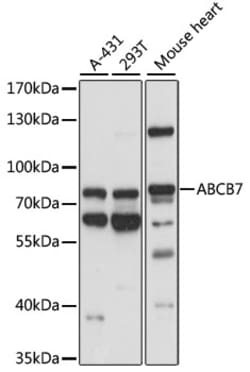
ABclonal Technology ABCB7 Rabbit pAb

The membrane-associated protein encoded by this gene is a member of the superfamily of ATP-binding cassette (ABC) transporters. ABC proteins transport various molecules across extra- and intra-cellular membranes. ABC genes are divided into seven distinct subfamilies (ABC1, MDR/TAP, MRP, ALD, OABP, GCN20, White). This protein is a member of the MDR/TAP subfamily. Members of the MDR/TAP subfamily are involved in multidrug resistance as well as antigen presentation. This gene encodes a half-transporter involved in the transport of heme from the mitochondria to the cytosol. With iron/sulfur cluster precursors as its substrates, this protein may play a role in metal homeostasis. Mutations in this gene have been associated with mitochondrial iron accumulation and isodicentric (X)(q13) and sideroblastic anemia. Alternatively spliced transcript variants encoding multiple isoforms have been observed for this gene.

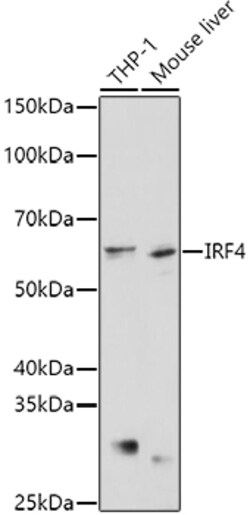
ABclonal Technology IRF4 Rabbit pAb
The protein encoded by this gene belongs to the IRF (interferon regulatory factor) family of transcription factors, characterized by an unique tryptophan pentad repeat DNA-binding domain. The IRFs are important in the regulation of interferons in response to infection by virus, and in the regulation of interferon-inducible genes. This family member is lymphocyte specific and negatively regulates Toll-like-receptor (TLR) signaling that is central to the activation of innate and adaptive immune systems. A chromosomal translocation involving this gene and the IgH locus, t(6,14)(p25,q32), may be a cause of multiple myeloma. Alternatively spliced transcript variants have been found for this gene.
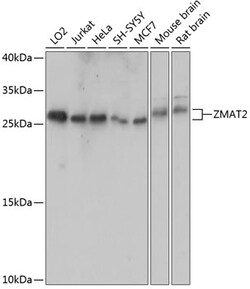
ABclonal Technology ZMAT2 Rabbit pAb
Predicted to enable DNA binding activity and zinc ion binding activity. Involved in mRNA splicing, via spliceosome. Located in nucleus. Part of U2-type precatalytic spliceosome.

Proteintech Group Inc Broad range prestained protein marker
The PL00002 Broad Range Protein Marker is a ready-to-use three-color proteinstandard with 13 prestained proteins covering a wide range of molecular weightsfrom 3 to 245 kDa in Tris-Glycine buffer. The PL00002 Broad Range Prestained ProteinMarker is designed for monitoring protein separation during SDS-polyacrylamide gelelectrophoresis, verification of Western transfer efficiency on membranes(nitrocellulose, PVDF, or nylon) and for estimating the size of proteins.
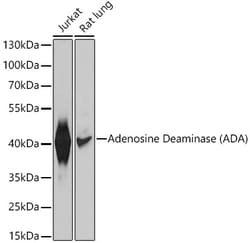
ABclonal Technology Adenosine Deaminase (ADA) Rabbit pAb
This gene encodes an enzyme that catalyzes the hydrolysis of adenosine to inosine in the purine catabolic pathway. Various mutations have been described for this gene and have been linked to human diseases related to impaired immune function such as severe combined immunodeficiency disease (SCID) which is the result of a deficiency in the ADA enzyme. In ADA-deficient individuals there is a marked depletion of T, B, and NK lymphocytes, and consequently, a lack of both humoral and cellular immunity. Conversely, elevated levels of this enzyme are associated with congenital hemolytic anemia.
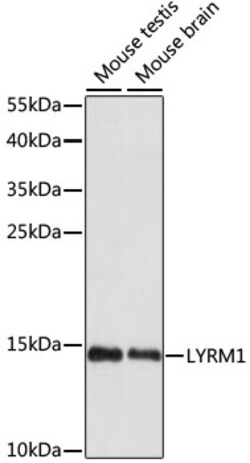
ABclonal Technology LYRM1 Rabbit pAb
The protein encoded by this gene belongs to the mitochondrial leucine/tyrosine/arginine motif family of proteins. Proteins of this family are short polypeptides that contain a leucine/tyrosine/arginine motif near the N-terminus. This gene is widely expressed with high levels in omental adipose tissue of obese individuals. In adipose tissue, the protein is localized to the nucleus where it promotes preadipocyte proliferation and lowers the rate of apoptosis to regulate adipose tissue homeostasis. Overexpression of this gene in adipocytes causes abnormal mitochondrial morphology and mitochondrial dysfunction. Alternative splicing results in multiple transcript variants.
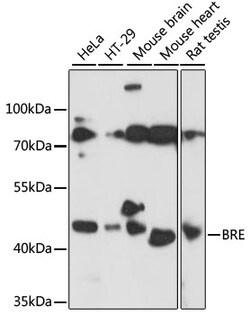
ABclonal Technology BRE Rabbit pAb
This gene encodes an anti-apoptotic, death receptor-associated protein that interacts with tumor necrosis factor-receptor-1. The encoded protein acts as an adapter in several protein complexes, including the BRCA1-A complex and the BRISC complex. The BRCA1-A complex possesses ubiquitinase activity and targets sites of double strand DNA breaks, while the BRISC complex exhibits deubiquitinase activity and is involved in mitotic spindle assembly. This gene is upregulated in several types of cancer.
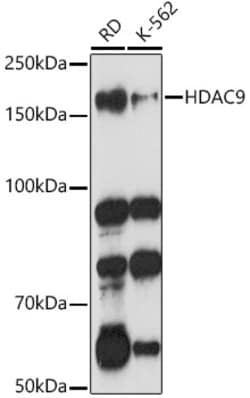
ABclonal Technology HDAC9 Rabbit pAb
Histones play a critical role in transcriptional regulation, cell cycle progression, and developmental events. Histone acetylation/deacetylation alters chromosome structure and affects transcription factor access to DNA. The protein encoded by this gene has sequence homology to members of the histone deacetylase family. This gene is orthologous to the Xenopus and mouse MITR genes. The MITR protein lacks the histone deacetylase catalytic domain. It represses MEF2 activity through recruitment of multicomponent corepressor complexes that include CtBP and HDACs. This encoded protein may play a role in hematopoiesis. Multiple alternatively spliced transcripts have been described for this gene but the full-length nature of some of them has not been determined.
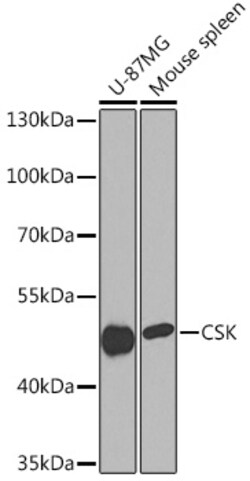
ABclonal Technology CSK Rabbit pAb
The protein encoded by this gene is involved in multiple pathways, including the regulation of Src family kinases. It plays an important role in T-cell activation through its association with the protein encoded by the protein tyrosine phosphatase, non-receptor type 22 (PTPN22) gene. This protein also phosphorylates C-terminal tyrosine residues on multiple substrates, including the protein encoded by the SRC proto-oncogene, non-receptor tyrosine kinase gene. Phosphorylation suppresses the kinase activity of the Src family tyrosine kinases. An intronic polymorphism (rs34933034) in this gene has been found to affect B-cell activation and is associated with systemic lupus erythematosus (SLE). Alternative splicing results in multiple transcript variants.
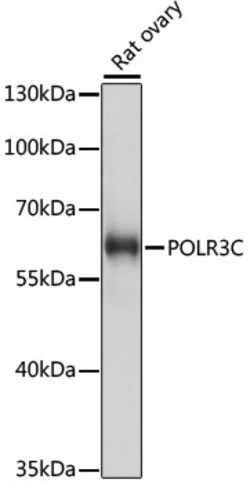
ABclonal Technology POLR3C Rabbit pAb
Enables single-stranded DNA binding activity. Involved in positive regulation of innate immune response and positive regulation of interferon-beta production. Located in nucleoplasm. Part of RNA polymerase III complex.
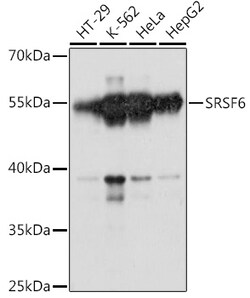
ABclonal Technology SRSF6 Rabbit pAb
The protein encoded by this gene is involved in mRNA splicing and may play a role in the determination of alternative splicing. The encoded nuclear protein belongs to the splicing factor SR family and has been shown to bind with and modulate another member of the family, SFRS12. Alternative splicing results in multiple transcript variants. In addition, two pseudogenes, one on chromosome 17 and the other on the X chromosome, have been found for this gene.
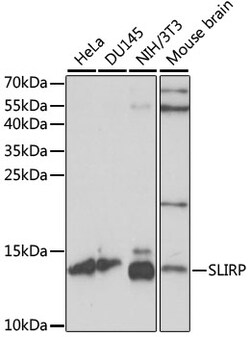
ABclonal Technology SLIRP Rabbit pAb
Steroid receptor RNA activator (SRA, or SRA1, MIM 603819) is a complex RNA molecule containing multiple stable stem-loop structures that functions in coactivation of nuclear receptors. SLIRP interacts with stem-loop structure-7 of SRA (STR7) and modulates nuclear receptor transactivation (Hatchell et al., 2006 [PubMed 16762838]).
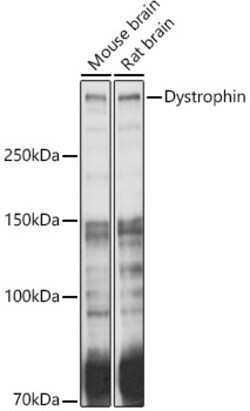
ABclonal Technology Dystrophin Rabbit pAb
This gene spans a genomic range of greater than 2 Mb and encodes a large protein containing an N-terminal actin-binding domain and multiple spectrin repeats. The encoded protein forms a component of the dystrophin-glycoprotein complex (DGC), which bridges the inner cytoskeleton and the extracellular matrix. Deletions, duplications, and point mutations at this gene locus may cause Duchenne muscular dystrophy (DMD), Becker muscular dystrophy (BMD), or cardiomyopathy. Alternative promoter usage and alternative splicing result in numerous distinct transcript variants and protein isoforms for this gene.
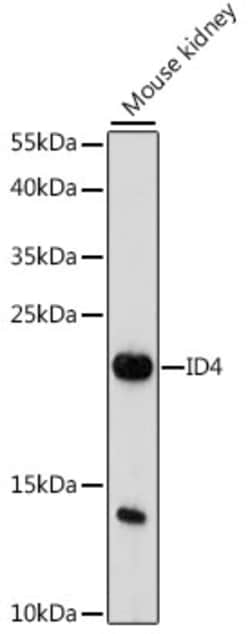
ABclonal Technology ID4 Rabbit pAb
This gene encodes a member of the inhibitor of DNA binding (ID) protein family. The encoded protein lacks DNA binding ability, and instead regulates gene expression through binding to and inhibiting basic helix-loop-helix transcription factors. This protein has been implicated in the regulation of diverse cellular processes that play a role in development and tumorigenesis.
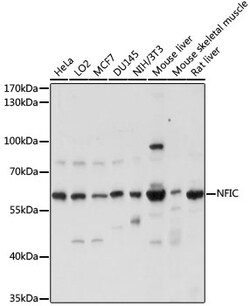
ABclonal Technology NFIC Rabbit pAb
The protein encoded by this gene belongs to the CTF/NF-I family. These are dimeric DNA-binding proteins, and function as cellular transcription factors and as replication factors for adenovirus DNA replication. Alternatively spliced transcript variants encoding different isoforms have been described for this gene.